The 72-Hour Gap Quietly Putting "Prepared" Families in the ER — and the $16 Tool That Closes It
Most American households who consider themselves "ready" for a storm have a pantry, a generator, and a few cases of bottled water. Our field testing this year confirmed what hospital pharmacists have been quietly warning about for two seasons: that's not enough. The gap between your last sealed bottle and your first sip of something safe is wider than you think.
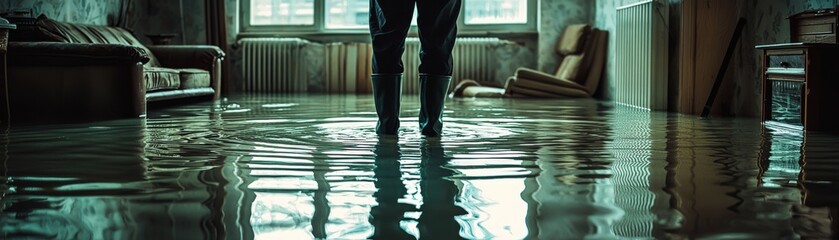
Above: A ground-floor residence in the days following a regional flooding event. Standing water inside a home is not "wet floor" — it is a contaminated mix of sewage backflow, household chemicals, and whatever the storm carried in. Tap pressure has typically failed by the time water reaches this level, leaving residents with no clean source and no time to think.
Most preparedness coverage focuses on the easy stuff — flashlights, batteries, a propane stove. The unsexy reality is that the thing most likely to send a "prepared" family to the emergency room isn't a lack of food. It's the water they end up drinking on day three when the bottled cases run dry and the tap is still useless.
We spent six weeks testing entry-level emergency filtration units against tap, lake, creek, and standing-rainwater samples in three states. The headline finding was simple, and a little uncomfortable: the household that thinks it is ready is usually the household whose plan ends at "we have a few cases of Costco water in the garage."
That plan buys a family of four about 48 hours of drinking water — less if anyone is using it to wash a wound or rinse a baby's bottle. After that, the average household quietly improvises. Boil water on the camp stove. Skim the top off the rain barrel. Use the questionable jug the neighbor handed over. By day three, gastrointestinal infection becomes the leading reason urgent-care lines stretch around the building. We saw the data in Asheville. We saw it in Houston. We're seeing it again now.
The part nobody tells you about boiled water
Boiling kills bacteria. It does not remove heavy metals from a flooded basement, chlorine-resistant cryptosporidium cysts, agricultural runoff, microplastics, or the lead that flakes off a 70-year-old service line when the pressure drops. After Hurricane Helene, public health officials in western North Carolina explicitly told residents not to rely on boiling alone for water pulled from outdoor sources. Most residents found out about that warning after they had already been drinking the water for a day.
"The number of preventable GI cases we see in the seventy-two hours after a regional water event is staggering. The patients are not the unprepared ones. They are the people who thought they were prepared, and then ran out." — Emergency Medicine Physician, FEMA Region IV, quoted in a 2025 hospital association briefing
Why this isn't a fringe concern anymore
The threat profile has changed in three specific ways since 2020, and the change is what's pushing this issue out of survivalist forums and into ordinary suburban kitchens.
One — the grid is older and the storms are bigger. The American Society of Civil Engineers rates the U.S. drinking water infrastructure at a C-minus. Average pipe age in major metros is now over 50 years. When the pressure drops, contaminants flow back into the lines. That is not paranoia. That is the boil-water notice you got last winter.
Two — utility cyberattacks are no longer theoretical. CISA documented multiple intrusions on U.S. water utilities in the past 24 months. The Oldsmar, Florida incident — where an attacker briefly altered sodium hydroxide levels in a municipal supply — was supposed to be a wake-up call. It was not.
Three — official guidance is honest about the limits of rescue. FEMA's own published guidance directs families to be self-sufficient for a minimum of 72 hours. Read between the lines: that is the minimum, not the goal. State-level emergency managers we spoke with use a two-week planning horizon now.
Why "we have bottled water" is not a plan
A standard 24-pack of 16.9 oz bottles is about 3.17 gallons. A family of four needs roughly 4 gallons per day for drinking, cooking, hygiene, and any pets. That single Costco run covers about three-quarters of one day. Most households we surveyed had two to three cases on hand. The kindest estimate: 48 hours. The realistic estimate: less.
What we were actually looking for
This is where we have to be careful. There is no shortage of cheap "survival straws" being advertised on Facebook by brands you've never heard of, with cartoon countdown timers and stock photos lifted from someone else's website. Most of them filter to 0.2 microns, which is fine for bacteria and parasites but does nothing for the chemical and heavy-metal threats that actually matter in a modern grid-failure scenario.
What we wanted was something narrower: a 0.01-micron hollow-fiber unit — the same membrane size that hospital dialysis equipment and emergency medical units use to make ambient water safe — that would (a) actually exist as a real product, (b) cost less than a tank of gas, and (c) be backed by a brand willing to put its name on a label and stand behind it.
Specification Bar — What 0.01 Microns Actually Means
That last column is the one almost nobody is reading. The difference between a 0.2-micron filter and a 0.01-micron filter is the difference between "this water won't give me dysentery tonight" and "this water won't give me a low-grade chemical poisoning over the next six weeks." For families with children, immunocompromised members, or anyone over 65, that distinction is the entire game.
The unit we ended up recommending
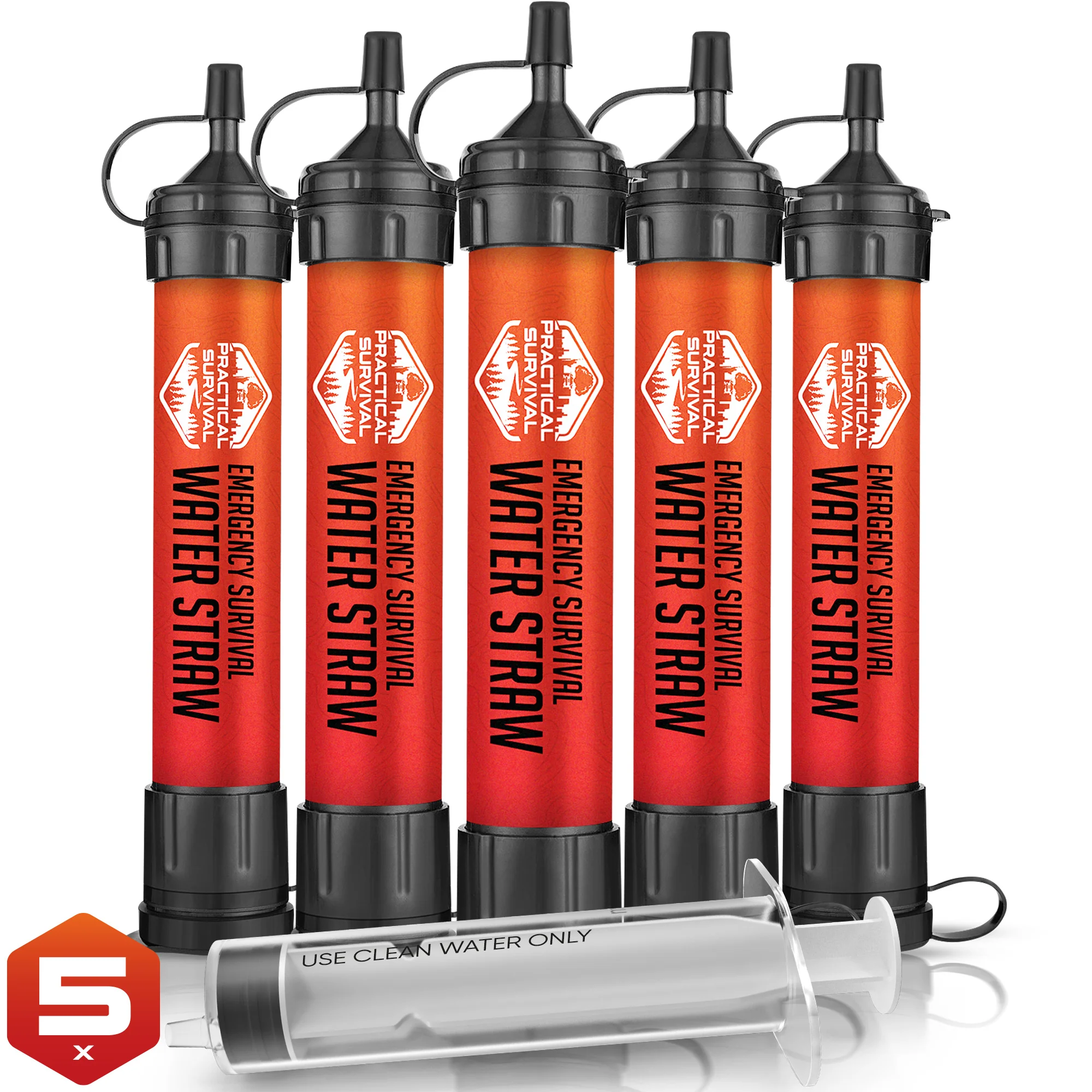
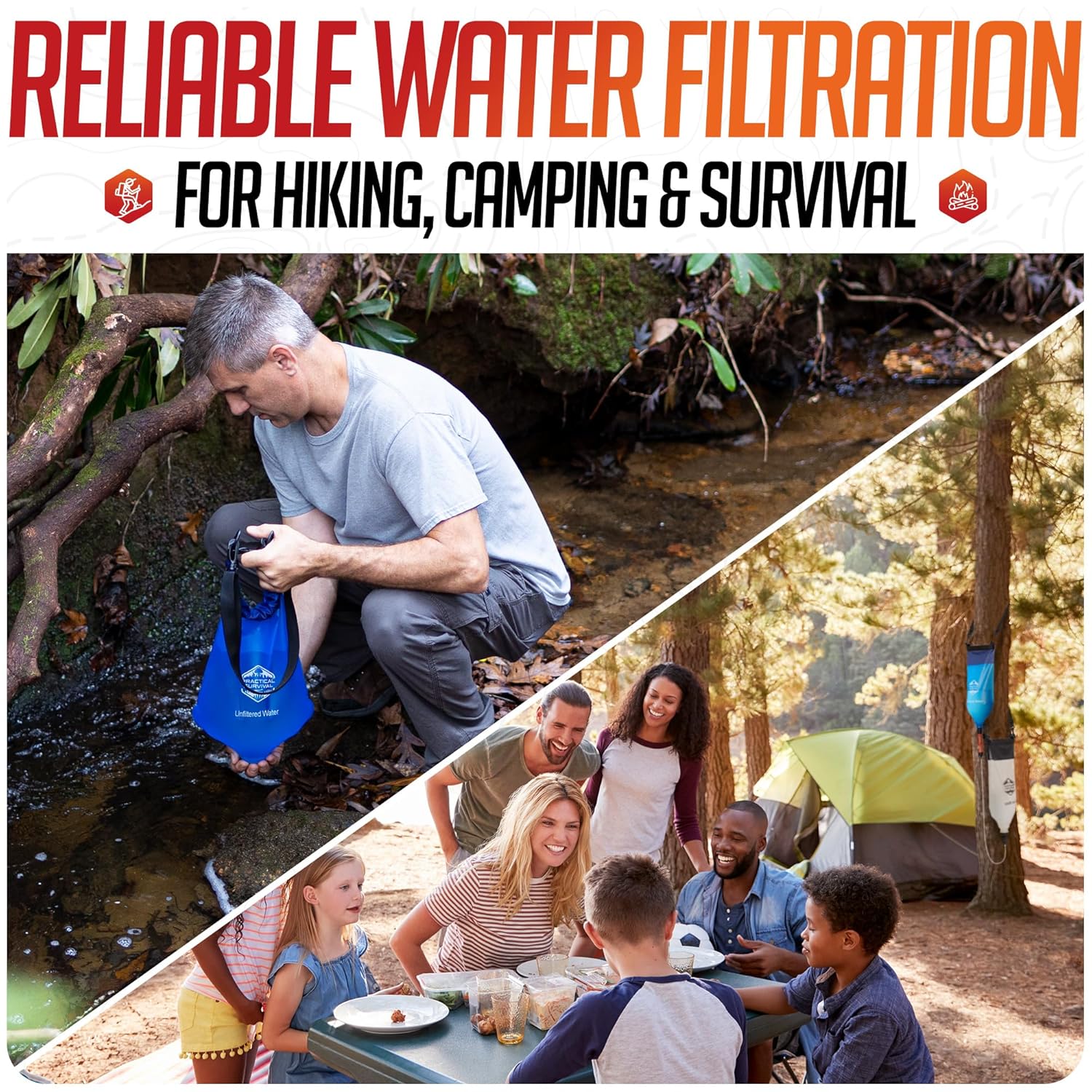
The filter we tested most extensively — and the one we ended up keeping in our own field kits — is the Practical Survival Emergency Water Straw, a 0.01-micron hollow-fiber unit sold by a small American outfit that has been quietly outfitting hunters, hurricane-zone households, and a handful of municipal emergency-management offices for the last several years. Each unit purifies up to 1,800 gallons. It works without electricity, batteries, or replacement cartridges. You can drink directly from a contaminated source, or thread it onto the neck of a standard 28mm water bottle and carry it.
What sold us was not the marketing — Practical Survival does almost none. It was the lab certification on the membrane, the back-flush syringe included in the package (most cheap straws clog and become useless within a single use; this one is rated for 5+ years of intermittent use), and the fact that the company has an actual return address, a real phone number, and a founder we were able to get on the phone within 48 hours of requesting an interview.
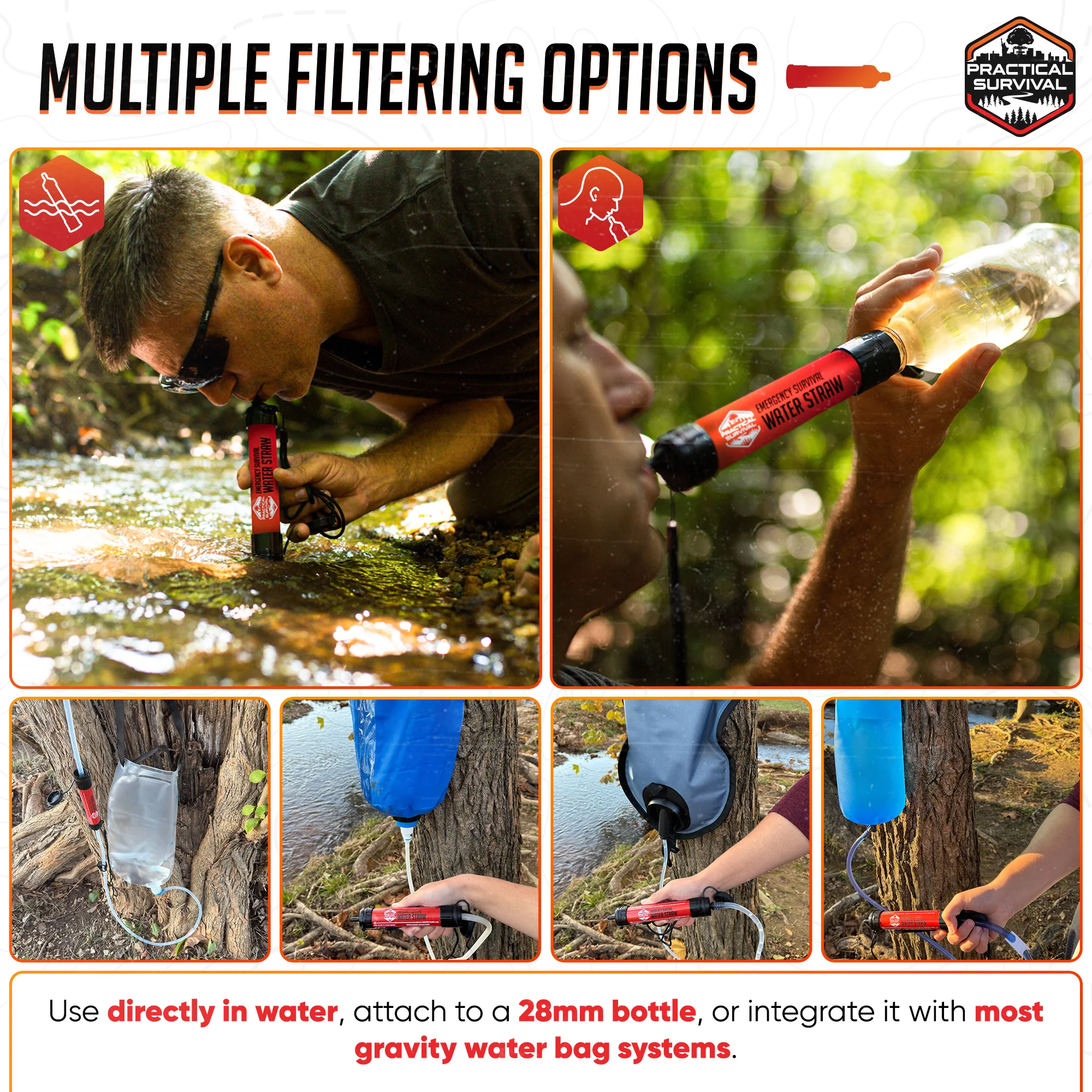
It is not a luxury item. At under $20 per filter when bought in the family-pack configuration, it is the cheapest piece of insurance most American households are not buying.
Verified Owner Reports
A note on timing
We do not love writing copy about urgency. It is the calling card of the worst end of the direct-response industry. But the timing on this one is real, and we would be doing our readers a disservice not to flag it: Practical Survival's production schedule is set six months in advance, and the spring-summer storm season run is already nearly half-allocated to retailer commitments. The current pricing on the five-pack — the configuration we recommend — is the lowest the direct channel has offered this year, and it is scheduled to revert at the end of the current discount window. Doomsday Digest earns a small commission if you order through the link below; we accept that arrangement only with products we use ourselves, and the price you pay is the same as the public site.